

Bottom line:
- Pay what you can (more than the minimum payment, if possible) on time.
- If you have trouble paying your credit card, ask your credit union or credit card provider for help.
- Credit card debt damages your credit score and credit history, which makes it harder to get a loan and can take a long time to fix.
When the number on your credit card bill is bigger than what’s in your checking or savings account, that’s stressful. But you do have options: First, pay whatever you can by the due date. And if you can send more than the required minimum payment, do. This helps reduce penalties and interest, plus it signals to the card provider that you’re trying to meet your payment.
How bad is credit card debt?
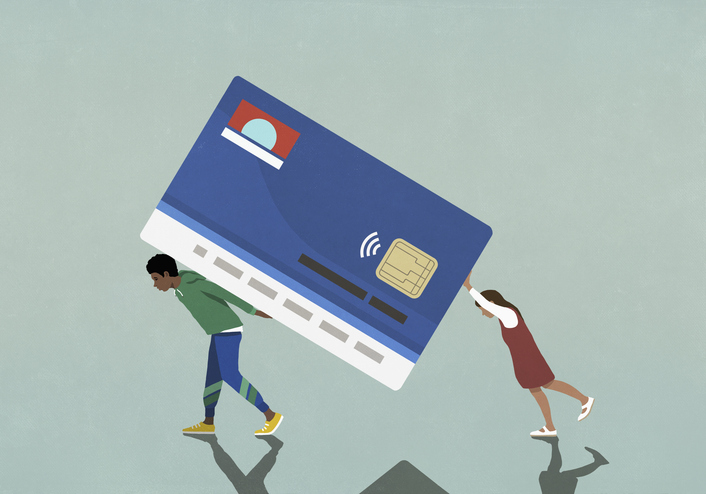
The truth is that this kind of debt can have a significant and lasting effect on your financial picture. Missing payments leads to late fees, and making partial payments results in interest charges that can quickly rack up, costing you more and damaging the good credit you’re working hard to create.
Not only does a poor credit score make it more difficult and more expensive to get approved for a loan, it can also affect your tenant screening report when applying to rent an apartment or house and make getting insurance or a cell phone plan more costly. Bad credit might even pop up on a background check for a job.
Because credit reporting companies value consistent, full, on-time payments over pretty much anything else, it can take a while for your credit score to bounce back from debt if it isn’t resolved quickly. How long? That depends on how high your balance is, whether payments were late or missed, how many were late or missed, and whether your account went to collections.
Getting back on track when you can’t pay your credit card bill
Reaching out to your credit union or credit card provider and paying as much as you can on time are the two most important steps to take if you know you can’t pay your credit card balance.
Whether on your own or with your credit union’s help, a solid next step is setting up a plan to pay back what you owe. Having a plan can be a big stress reliever in itself because you can see exactly when and how you’ll get your balance down to zero again.
And while it may seem obvious, it’s worth taking an honest look at your spending to find areas where it’s possible to cut back. The more money you can redirect to paying off what you owe, the better. And if missed payments are a problem, setting up autopay and account alerts are easy ways to make sure you always know when your balance is due and that it’s paid.
The sooner you ask for help, the easier it is to get back to the basics of building good credit and making progress toward a strong credit history.
What factors are used to calculate credit scores?
The two main companies that provide credit scores in the U.S. — FICO and VantageScore — calculate scores a little differently. But both weigh these criteria:
- Your history of full, on-time payments
- Length of credit history
- Whether you use most or all of your credit or exceed the limit
- Number of credit cards and new/recent applications for credit cards
- Amount owed on credit cards and other loans, such as student, home, and car loans
Everyone is entitled to one free credit report every year, so if you’re wondering what your score is, you can request your report by going to AnnualCreditReport.com or calling 1.877.322.8228.
Explore more about credit cards
Learn more about applying for a CEFCU credit card and explore these resources that help answer common questions about credit cards and building good credit:
►How do credit cards work?
►How do credit card payments work?
►What’s the best first credit card for me, and how do I get started?
►How do I use a credit card so it helps my credit instead of hurting it?
►Are credit card rewards actually worth it, or is cash back better?
Reach out to CEFCU to learn more.


