

It’s best practice to regularly check your subscription services and billing activity for accuracy. We’ve got some tips to help you recognize the red flags for these common scam tactics: fake subscription renewals, phony billing notices, and bogus tech support pop‑ups.
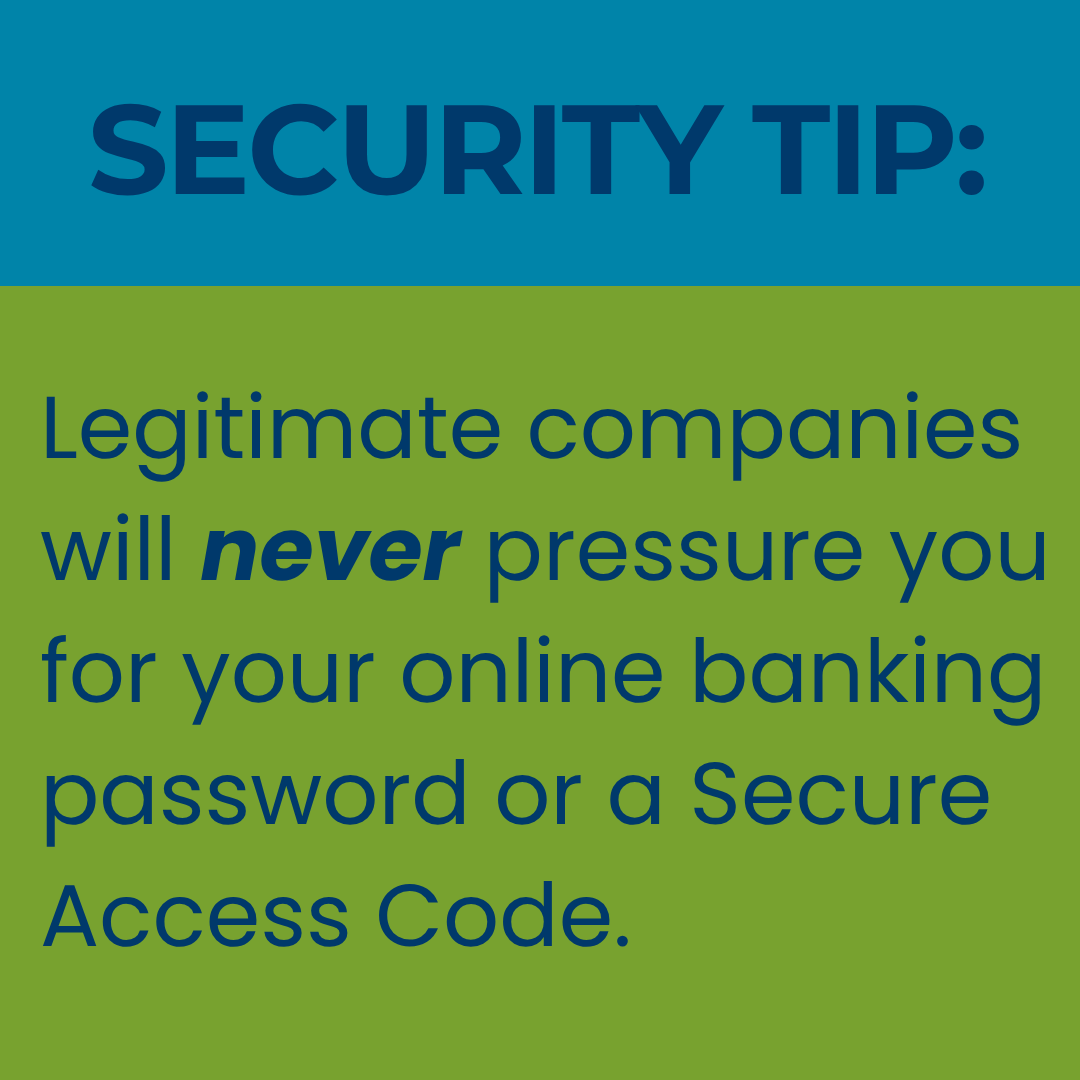
Legitimate companies will never pressure you to act immediately, request your online banking credentials, or demand payment through gift cards, wire transfers, cryptocurrency, or person‑to‑person (P2P) apps.
Here’s what to watch for — and how to stay safe.
Fake Subscription Renewals and Billing Notices
Scammers send emails or texts claiming a service renewed or charged for a high dollar amount — commonly $300 or more. The services most often claimed in these fake notices are anti-virus, cloud storage, streaming, or utilities. Be cautious if a message includes any of the following:
- A vague or generic invoice or unexpected bill
- Claims of a failed payment or pending charge
- Urgent instructions to cancel or dispute
- A phone number to “resolve the charge”
The scammer’s goal: Convince you to call. Once you do, scammers may request remote access or sensitive information such as card numbers, online banking login details, or a Secure Access Code (SAC).
Tech Support Pop Ups
A pop‑up may suddenly warn that a virus was detected and instruct you not to close the window. These often misuse Microsoft, Apple, or well-known antivirus logos.
The fraudster’s goal: Scare you into calling the displayed number. Fraudsters may claim your CEFCU accounts are compromised and attempt to guide you into sending money to a “safe account” or sharing a SAC.
Red Flags to Watch For
Be cautious if you notice:
- Payment demands via gift cards, crypto, wire transfers, or P2P apps
- Requests for remote access or software installation
- Urgency paired with high dollar amounts or unexpected charges
- Misspellings or unusual sender addresses
- A phone number included in the message instead of directing you to an official website
If you’re unsure whether a message is real, don’t use links or phone numbers provided. Instead, visit the company’s official website or app directly, or check CEFCU digital banking for unrecognized charges.
CEFCU will never:
- Ask for your Online Banking password or Secure Access Code
- Request remote access to your device
- Tell you to move money to a “safe account”
- Pressure you to act immediately or secretly
If something feels suspicious, hang up and contact CEFCU’s Member Contact Center at 1.800.542.3328.
If You Clicked, Called, or Shared Information
Act quickly:
- Contact CEFCU immediately.
- Close your browser and restart your device.
- Save the message or screenshots.
- Change passwords for email, CEFCU On‑Line® Banking, and any other accounts affected.
- Turn on two‑step verification.
How to Report
- Contact CEFCU at 1.800.542.3328.
- File a report with local law enforcement.
- Report scams to the Federal Trade Commission (FTC) at ReportFraud.ftc.gov or 1.877.IDTHEFT (1.877.438.4338).
When in Doubt, Pause and Verify
Protect both your personal information and finances by staying alert to these scams and learning to recognize the warning signs. Always take a moment to verify messages, websites, and phone numbers to reduce your risk and stay in control of your accounts. When something doesn’t feel right, pause and reach out. CEFCU is here to help you stay informed, protected, and confident in your financial security.


