

Bottom line:
- A debit card takes money from your checking account to pay for things. With a credit card, the credit union or bank gives you a short-term loan that you pay back.
- Both debit cards and credit cards can be used anywhere — online, in apps, and in person — to make purchases.
- Choosing an account with an overdraft transfer plan can help protect you against fees and penalties if you spend more than you have in your checking account, but it’s still important to keep track of what is coming in, and what is going out.
A debit card is tied to your checking account, so you’re using your own money when you pay for something. A credit card is basically a loan from the card provider to pay for whatever you’re buying. You’re expected to pay off that loan soon (usually at least 21 days after your monthly billing statement closes) to avoid interest charges or other fees.
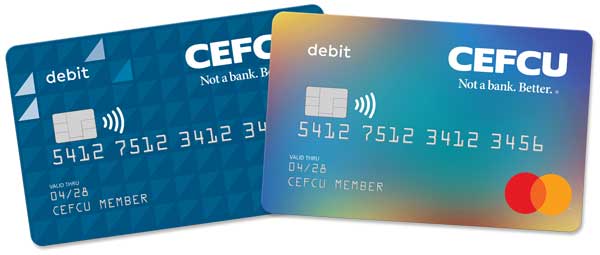
The limit of what you can spend on your debit card is what’s in your checking account (beyond any daily spending limits), while the maximum amount you can spend on a credit card is decided by the credit union or bank that issues the card, referred to as a credit limit. (The limit is calculated based on your credit score and credit history; the lender will tell you what it is when you’re approved for a credit card.)
Both debit cards and credit cards can be used anywhere you make purchases — in person, online, and in apps.
The benefits of overdraft protection
Keep in mind that if you spend more than what’s in your checking account, you could be charged what’s called an “overdraft fee.” If this is a possibility, you can choose an optional overdraft transfer plan, which transfers money from a linked account (such as a savings account) at the same bank or credit union to cover the gap between what’s in your account and any transaction(s). Depending on the financial institution, there may be a small fee for completing the overdraft protection transfer, but it is typically less than the overdraft fee itself (at CEFCU, transfers under an approved Overdraft Transfer Plan are free!).
Overdraft transfer protection tools like these can help you avoid merchant fees, declined transactions, and penalties — however it’s not guaranteed that a transaction that would result in an overdraft will be approved, so be sure to keep track of your spending. If you keep overspending on your checking account, use the tools in your bank or credit union’s mobile banking app; setting up alerts, for example, makes it a lot easier to track spending and see exactly when a payment hits your account.
Explore more about checking accounts
Learn more about opening a checking account and explore these resources that help answer common questions about:
►How do I use a checking account day-to-day?
►How is my money protected when I use a debit card, and what should I watch out for?
►What does a checking account do?
►How do I choose the right checking account for me?


