

Falling victim to a scam can be devastating. Unfortunately, for some, the fraud attempts don’t end there.
Imagine losing money to a scam, only to receive communication weeks later from someone claiming they can help recover your funds. They may say they're from a government agency, a law firm, or a consumer advocacy organization. All you need to do, they claim, is pay a fee or provide some personal information.
In reality, this may be another scam.
Known as refund or recovery scams, they target people who have already lost money to fraud. Scammers know victims may be eager to recover their losses, and they use that hope to convince them to send more money or share sensitive information. According to the Federal Trade Commission (FTC), fraudsters often impersonate trusted organizations and promise to help recover funds, prizes, or merchandise that were previously lost in a scam.
How Refund and Recovery Scams Work
Recovery scammers often target people who have previously been victimized. They may contact consumers by phone, email, text message, social media, or even traditional mail. To gain trust, they often claim to represent:
- A government agency
- Law enforcement
- A law firm
- A consumer advocacy organization
- Another organization that can supposedly help recover lost funds
They may tell you that your money has been located, a settlement has been reached, or a refund is available. Before they can "help," however, they request an upfront payment, sometimes described as a processing fee, administrative charge, or retainer fee. They may also ask for personal or financial information, claiming it is needed to complete the recovery process. Once they receive the money or information, they disappear.
Warning Signs of a Recovery Scam
While recovery scams can take many forms, there are several common red flags to watch for:
- Someone contacts you unexpectedly about money you previously lost.
- They guarantee they can recover your funds.
- They claim to represent a government agency, law firm, or advocacy organization.
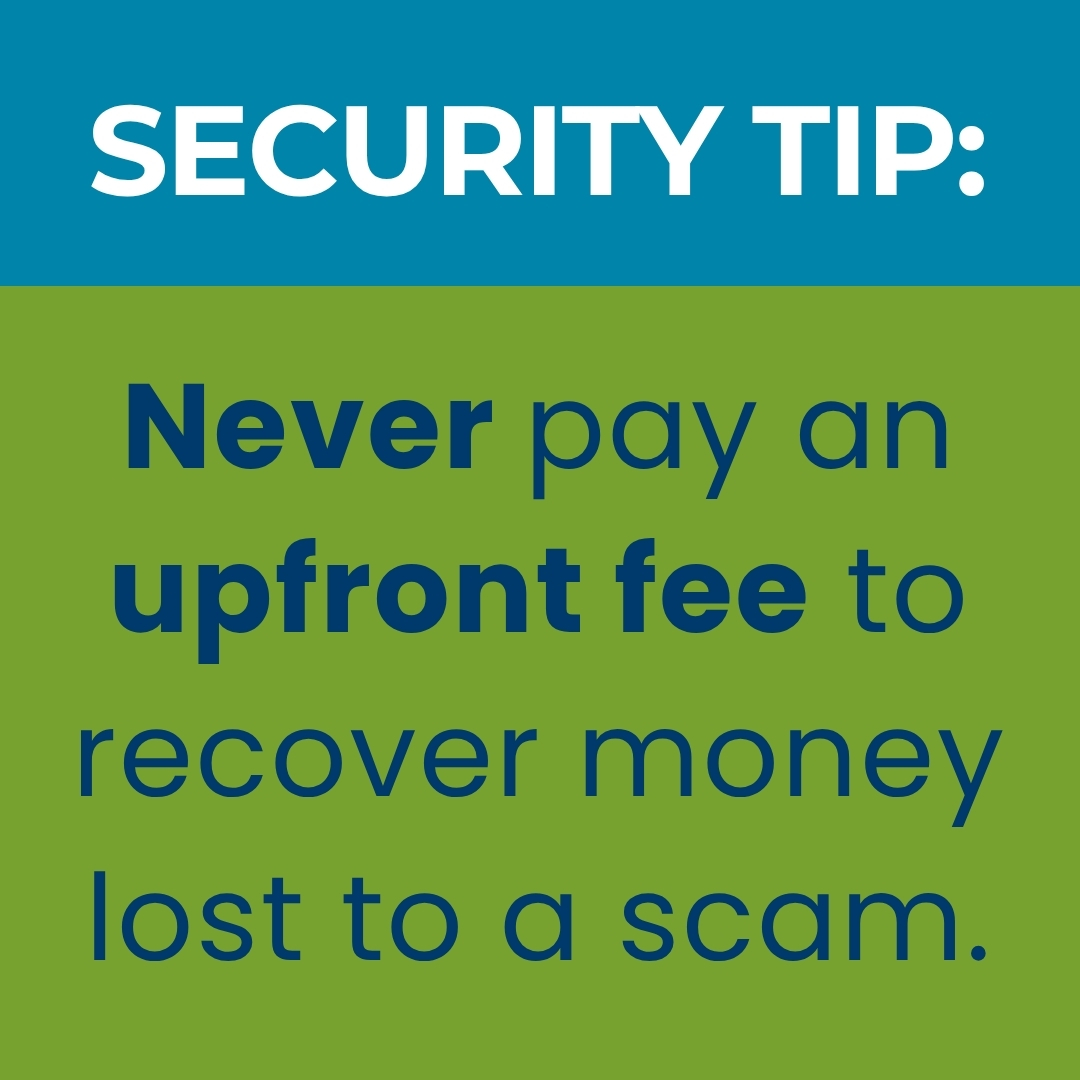
- They ask for an upfront fee before helping.
- They request account credentials, banking information, or other sensitive personal information.
- They pressure you to act quickly or keep the matter confidential.
If any of these situations occur, proceed with caution. Legitimate government agencies and reputable organizations do not require upfront payments to help consumers obtain refunds or recover funds lost to fraud.
How to Protect Yourself
If someone contacts you claiming they can recover money you've lost, consider these steps:
- Do not send money or pay advance fees.
- Do not provide personal, financial, or account information.
- Independently verify the identity of the individual or organization contacting you.
- Research the organization online and look for consumer complaints or scam reports.
- Contact your financial institution if you believe your accounts may be at risk.
Taking a few minutes to verify information can help prevent additional losses.
If You've Already Been Scammed
If you've lost money to a scam, act as quickly as possible. Depending on how the payment was made, you may be able to stop a transaction, dispute a charge, or pursue other recovery options through legitimate channels. It's also important to monitor your accounts, update passwords when appropriate, and report the scam to the proper authorities.
Most importantly, be skeptical of anyone who promises a guaranteed recovery of lost funds, especially if they ask for money first.
Protecting Yourself from the Scam After the Scam
Scammers are constantly changing their tactics, and refund and recovery scams are designed to exploit people when they are already vulnerable. Understanding the warning signs can help you avoid becoming a victim a second time.
Remember: if someone promises to recover money you lost to a scam in exchange for an upfront fee, that's likely a warning sign, not a solution.
If you suspect fraudulent activity involving your CEFCU accounts, call us immediately at 1.800.542.3328 so appropriate steps can be taken to help protect your accounts.


