


Are you aware of one of the latest trends used by scammers? It involves using cryptocurrency, which is digital currency that exists only online. While there are several different kinds of cryptocurrencies, the most common is Bitcoin. To obtain crypto, an individual needs to exchange
real money for the digital currency.
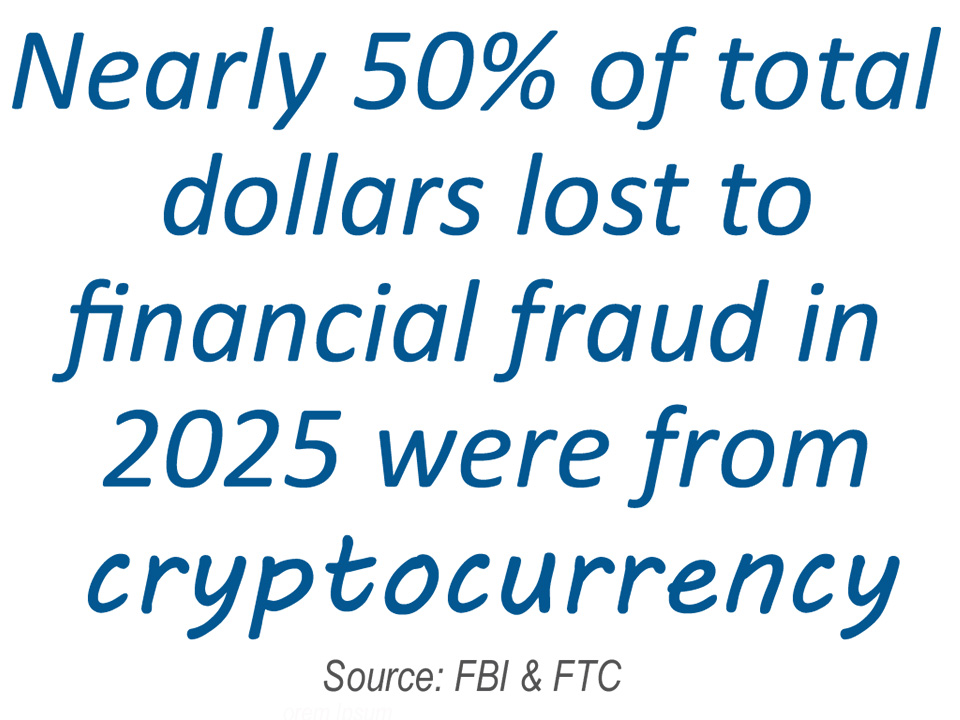
The most important thing to know: cryptocurrency is not backed by the federal government or any financial institution! As of late 2025, approximately 10% of all financial fraud complaints filed with the FBI or Federal Trade Commission (FTC) were related to crypto. However, nearly 50% of total dollars lost to financial fraud were from crypto, totaling billions of dollars.
Scammers often exploit the unfamiliarity with crypto in a number of ways. They may claim to be from the government, law enforcement, your utility company, or someone claiming you won a lottery and may require you to send a payment using crypto. Once you do, your money is gone — there’s usually no way to get it back.
Other times, scams may happen through someone you met online that claims to have “a great investment opportunity.” The big red flag that’s becoming common: funding crypto wallets that you didn’t personally set up. Scammers may direct you to deposit money in a Bitcoin ATM or transfer funds to “your investment account” using a link they send you. They may even create a fake website for you to track your supposed returns to entice you to invest more. But when you want to withdraw from your earnings, they’ll make you pay more fees and may then stop communication altogether.
Here are a few tips to help you from becoming a victim of a Cryptocurrency Scam:
- Ignore unsolicited emails, texts, tweets, calls, or other messages that tell you to pay only with cryptocurrency.
- Be suspicious if someone pressures you to act quickly or guarantees you’ll make money with cryptocurrency.
- Don’t send money to someone you haven’t met in person. Romance scams often involve sending money via cryptocurrency.
- Remember, no government agency, police force, utility company, or similar entity will ever require you to pay them with cryptocurrency.
The bottom line: always be skeptical of situations similar to those mentioned above. If you spot something that appears to be a cryptocurrency scam, report it to the FBI’s Internet Crime Complaint Center (IC3) at ic3.gov.


