

Scammers rely on urgency and emotion to steal money and personal information. Learn how to recognize the warning signs and respond with confidence.
Scams are constantly evolving, but the tactics behind them often remain the same. Whether the contact comes by phone, text, email, social media, or even through a seemingly legitimate website, scammers use predictable methods to pressure people into giving up money or personal information. Knowing the key warning signs can help you stop a scam before it causes harm.
1. Someone Pretends to Be a Person or Organization You Trust
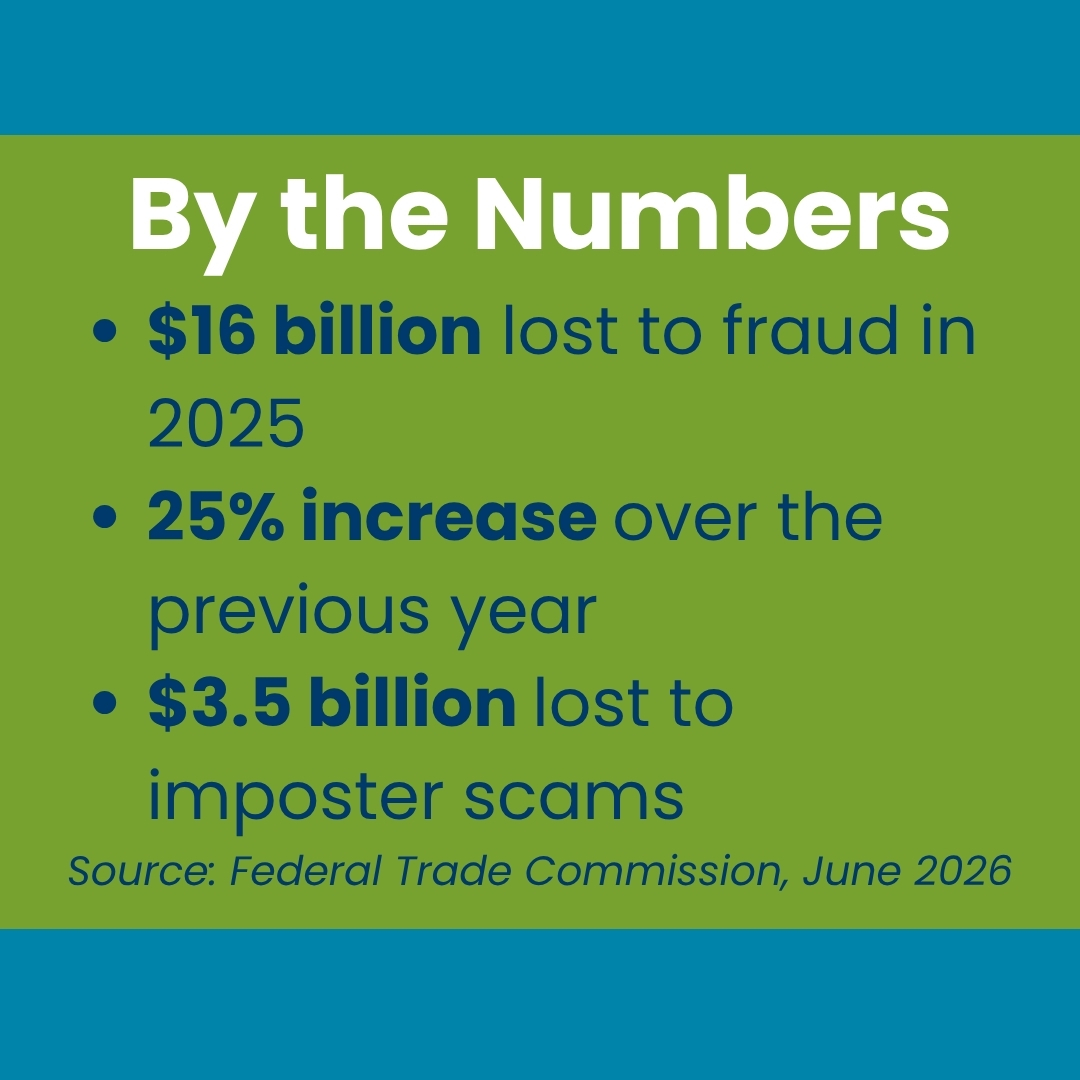
One of the most common scam tactics is impersonation. Scammers may claim to represent your financial institution, a government agency, a utility company, a well-known business, or even a family member in need. They often use technology, including AI, to make phone numbers, emails, websites, text messages, and links appear legitimate. Some scammers also use AI-generated voices or videos to impersonate family members, financial institutions, or other trusted organizations, making their requests seem convincing.
What to do: If you receive an unexpected request from a trusted organization, stop and verify it. Contact the organization directly using a phone number or website you know is legitimate. Avoid clicking links in unexpected emails, texts, or social media messages. Instead, visit the organization's website by typing the web address directly into your browser.
2. They Create a Sense of Urgency
Scammers want you to act before you have time to think. They may tell you your account has been compromised, that you'll be arrested if you don't pay immediately, or that a loved one is in an emergency situation. The goal is to trigger fear, panic, or excitement so you'll make a quick decision.
What to do: Slow down. Legitimate organizations will give you time to review information, ask questions, and make informed decisions. When in doubt, talk to someone you trust before acting.
3. They Ask for Personal or Financial Information
Be cautious any time an unexpected caller, texter, or email sender asks for account numbers, passwords, one-time verification codes, Social Security numbers, or other sensitive information. Criminals use this information to access accounts, commit identity theft, or steal money.
What to do: Never share sensitive information in response to an unsolicited request. If the message appears to come from a trusted company, contact the company directly through official channels.
4. They Tell You Exactly How to Pay
A major red flag is when someone insists on a specific payment method. Scammers frequently demand payment through gift cards, wire transfers, cryptocurrency, payment apps, or other methods that are difficult to trace and recover. They may also send a fake check and ask you to send money back.
What to do: Be suspicious of anyone who pressures you to pay using unconventional methods. A legitimate business will not require gift cards, cryptocurrency, or similar forms of payment to resolve an issue.
5. The Offer Seems Too Good to Be True
Promises of easy money, guaranteed prizes, unbelievable bargains, or exclusive opportunities are common scam tactics. Scammers count on people focusing on the reward instead of the warning signs. If you're asked to pay a fee upfront to claim a prize, receive a gift, or secure a job opportunity, it's likely a scam.
What to do: Take time to research the offer, ask questions, and get details in writing. If something feels off, trust your instincts and walk away.
Protect Yourself
The best defense against scams is awareness. If you receive an unexpected message, phone call, or request involving money or personal information, pause before responding. Verify the source independently, talk to someone you trust, and remember that scammers only succeed when they rush people into acting without thinking.
If you believe you've encountered a scam, report it to the appropriate authorities and your financial institution as soon as possible. CEFCU members are encouraged to call 1.800.542.3328 to report suspected fraudulent activity. Acting quickly may help limit losses and protect others from becoming victims.


